Cart
0
You may also like



You ask ten people in India what they look forward to most in a day, and at least seven will say chai time. Not lunch. Not the weekend. Chai time. It's a small window, five or ten minutes, but somehow it carries more weight than that. Maybe you take yours as a quick chai break between chores, or maybe your whole morning chai routine is built around that first cup. Either way, this piece is about that habit — what chai time really is, where it comes from, and a few small things that can make yours better.
Here's the thing about chai time — it was never really about the tea. It's the pause. The few minutes you steal from a packed day just to sit down, breathe, and talk to someone. Most Indian households hit chai time two or three times a day, sometimes more if guests show up. Morning chai routine first, then again after lunch, and honestly, a lot of homes squeeze in one more round by evening.
Walk into any office, any home, any tea stall on a random street corner, and you'll see chai time doing the same thing everywhere — pulling people together. A neighbour steps out for chai time and ends up chatting for twenty minutes. Colleagues use it as an excuse to leave their desks. Even two strangers at a roadside stall will start talking over a cup of Indian chai, no introduction needed. That's just how this desi chai habit works.
People assume chai time has always been "Indian," but that's not quite true. Tea gardens in Assam and Darjeeling go back well over a hundred years, and it took time — decades, really — for this daily cup to weave itself into everyday chai culture in India the way it has. What began as a British-era export slowly turned into something entirely our own: spiced, boiled with milk, poured out for whoever's around.

And every region did its own thing with chai time. Mumbai's tapri culture gave the world cutting chai — small glass, strong hit, gone in five minutes, perfect for a quick kadak chai between shifts. Punjab went the other direction, piling on spice until a simple cup became an event. Even now, cross a state border and your chai time changes completely, but somehow the ritual underneath stays exactly the same.
There's a reason a proper cup feels like more than just a drink. Most traditional masala chai recipes are loaded with ingredients that do real work in your body, not just flavour. That caffeine hit during chai time is almost the least interesting part of what's happening in the cup, if you really think about it.
Quick look at what usually goes in, and why it matters:
|
Ingredient |
What It Does |
|
Ginger |
Aids digestion and supports immunity |
|
Cardamom |
Freshens breath and soothes the stomach |
|
Cloves |
Works as a natural anti-inflammatory |
|
Cinnamon |
Helps balance blood sugar levels |
|
Black pepper |
Adds warmth and helps the body absorb nutrients |
|
Tulsi (holy basil) |
Known to support immunity and ease stress |
None of that happens by accident, honestly. Every one of those ingredients has been in Indian kitchens for generations, long before anyone called it "wellness." That's probably why an evening chai feels so different from a can of cola or a fourth coffee — no crash, no jitters, just a gentle lift.
You don't need a fancy setup to get your chai time right. Here's roughly how most Indian homes do it:
Boil water with crushed ginger, a pinch of cardamom, and a bit of cinnamon.
Drop in the tea leaves once the water starts changing colour.
Let it simmer two or three minutes — don't rush this part.
Add milk, bring it back to a boil, until it's that deep, kadak chai brown.
Strain, pour, and that's it — chai time is served.
Patience is really the only trick here. Rush the boil and you get a weak, watery cup, and nobody wants that halfway through their chai time.

A cup on its own during chai time is fine. A cup with the right tea time snacks next to it? That's a different experience altogether. Certain snacks just bring out flavours in tea that you wouldn't notice otherwise.
|
Snack |
Pairs Well With |
|
Samosa |
Kadak Assam chai |
|
Parle-G biscuit |
Ginger chai |
|
Pakora |
Masala chai |
|
Khari biscuit |
Elaichi (cardamom) chai |
|
Namkeen mix |
Bombay cutting chai |
Try switching up your snack during your next chai time and see if it changes how the cup actually tastes. It usually does.
Ask someone from Mumbai and someone from Amritsar what chai time means, and you'll get two completely different answers — that's what makes chai culture in India so much fun to dig into. In Mumbai, it's a small glass of strong, milky cutting chai grabbed on the way somewhere. In Punjab, it's often loud with spice — extra ginger, extra pepper, no apologies. Up in Assam, where the leaves are actually grown, people keep it simple: kadak chai, strong, no fuss.
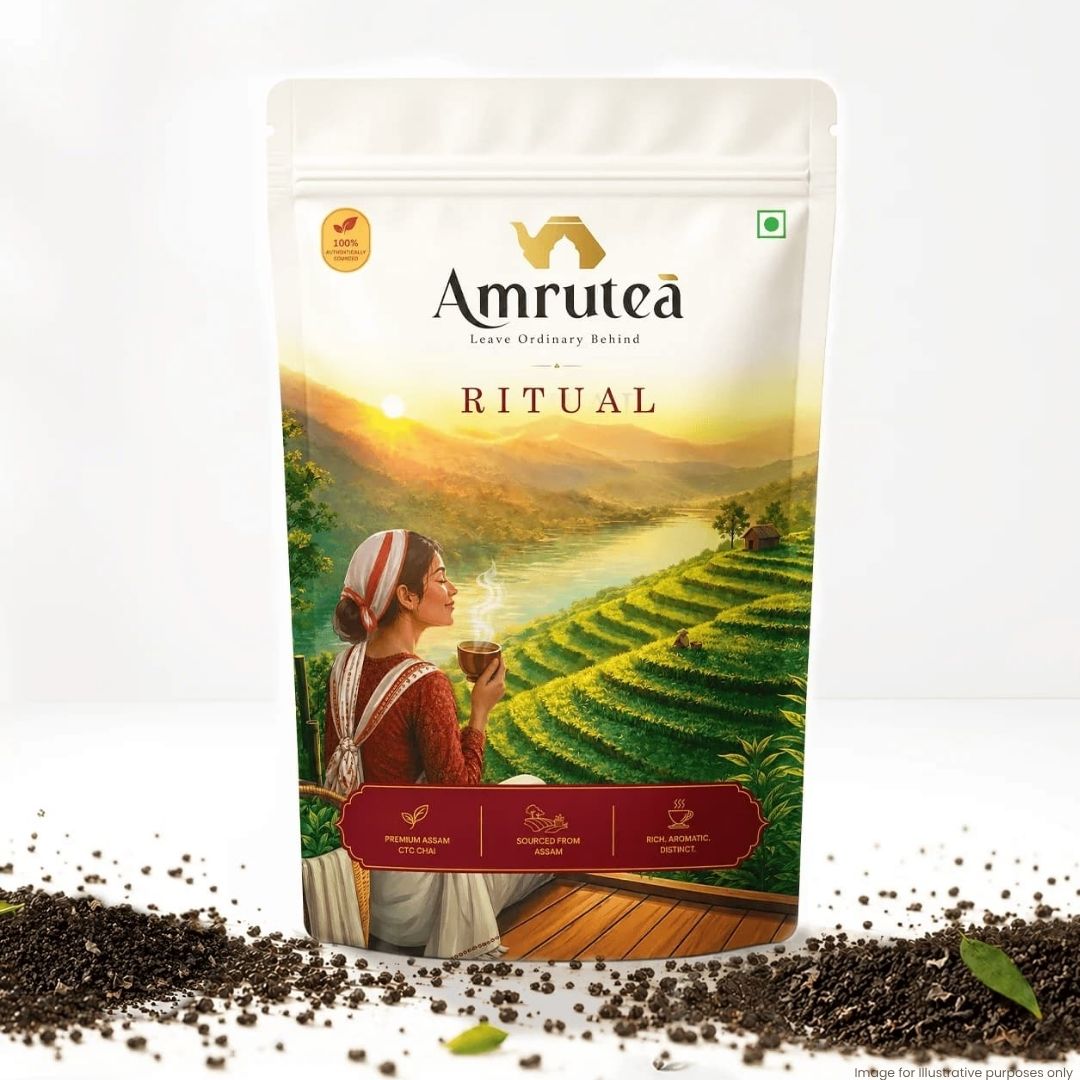
At Amrutea, we've tried pulling these different styles of chai time under one roof, using premium tea leaves sourced straight from the source. The Ritual blend leans into that classic, no-nonsense Assam strength. Bombay Cutting Chai brings the tapri energy straight into your kitchen. Every blend is built around how people actually drink their desi chai day to day — not some idealised version of it — so no matter where you grew up, your chai time should still feel familiar.
Not every tea brand gets what chai time is actually supposed to feel like — and honestly, a lot of them don't try. At Amrutea, the whole approach is built around premium tea, small batches, real ingredients, flavour that doesn't fall flat by the third cup. Whether your chai break is a solo five minutes with a book or a full family conversation, the tea should just work.
What is the best time for chai time in India?
Most households go for early morning and late afternoon, with plenty adding a third, more relaxed evening chai round.
Can chai time actually be healthy?
Yes, genuinely. With ginger, cardamom, and tulsi in the mix, this daily cup does more than wake you up — it can help digestion and support immunity too.
What tea time snacks pair best with chai time?
Depends what you're drinking during your chai time. Strong, spiced chai goes well with something fried like samosas or pakoras, while a milder blend suits a plain biscuit better.
How many cups of chai time tea should you have in a day?
For chai time, two or three cups is the sweet spot for most people. Spread across the morning chai routine, afternoon, and evening, you get the lift without overdoing the caffeine.
Chai time isn't going anywhere, and honestly, why would it. It's one of the few habits that's survived every generation basically untouched, even as everything else changed around it. Strong or light, spiced or plain, this little ritual deserves the same care every single day. Give Amrutea a try, and see how different your next chai time actually feels.


